Welcome Back from Principal Lattin
Welcome to the Pendleton Early Learning Center!
If you think there is nothing cuter than a kindergartner petting a cute, fuzzy chick, you are probably right.
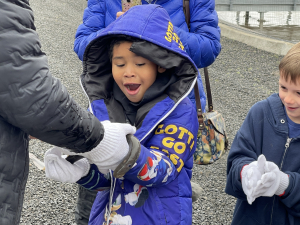
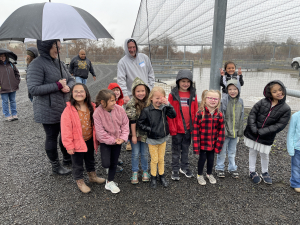
A chilly, rainy morning couldn’t dampen the excitement of kindergartners from the Pendleton Early Learning Center as they enjoyed a field trip to the Pendleton Accumulation Site of the Confederated Tribes of the Umatilla Indian Reservation (CTUIR) Fisheries Program on Wednesday, April 12th.
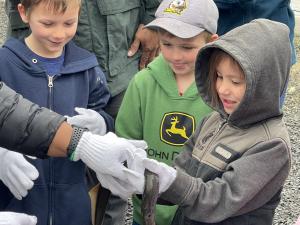
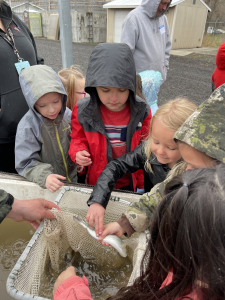
At the site in Mission, the students got an up close, first-hand look at some fish. They got to touch small Coho salmon and larger Steelhead salmon held in nets in tanks. But the stars of the show were the Pacific lamprey, which are eel-like fish that are anadromous, meaning they migrate from fresh water to the ocean during their life cycle, as salmon do.
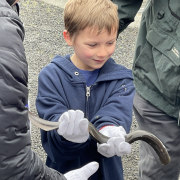
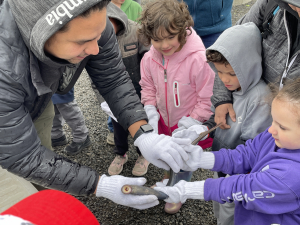
The lamprey, held in a large cooler, were handled by Kanim Moses-Conner from the CTUIR Fisheries Program. When he opened the lid and lifted one of the wriggling fish out, squeals erupted from the young students. Moses-Conner pointed out the lamprey’s sucker-like mouth, gills and undulating body, explaining that they are part of an ancient superclass of jawless fish that have been on Earth since before the dinosaurs. After donning gloves, the kindergartners each got a turn to hold the lamprey, much to their delight.
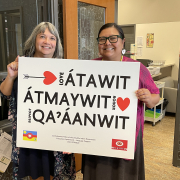
This PELC field trip is part of a learning unit about Salmon or the Núsux Life Cycle, which has been taught by Shawndine Jones, Walk to Language Teacher at the PELC, and Mildred Quaempts, Umatilla Language Master Speaker for CTUIR. The kindergartners receive two or three lessons in the classroom about the salmon life cycle, how important salmon are and learn Umatilla words for types of salmon and where they live: rivers, Columbia River, ocean. Quaempts said the lessons focus on Áwni Tkʷátat, traditional foods like water, salmon, deer, roots and berries. “CTUIR believes that teaching to respect and honor Áwni Tkʷátat will promote a healthy lifestyle. Children must experience learning about Áwni Tkʷátat and stories, so the children will get cultural exposure at school and home,” Quaempts said.
Jones said CTUIR is doing amazing things with the Fisheries Program to help the salmon, and it’s a good experience for the students to see the live salmon on the field trip, which hasn’t occurred since before the COVID pandemic. “The PELC is very thankful for the Confederated Tribes of the Umatilla Indian Reservation Fisheries Program and staff for allowing our students to have this awesome experience,” Jones said.
Judging from the smiles on the small faces of the students, it was indeed an awesome experience!
The PELC thanks those from the CTUIR Fisheries Program who were on site for the field trip: Shaun Montgomery, Aaron Jackson, Ty Minthorn, Kanim Moses-Conner, Paul Sheoships and Jerrid Weaskus and Easton Powaukee.

You are invited to participate in a research study, Native Voices Across Generations: Reimagining Discipline in a New School Landscape (Native Voices or NV) project.
The Pendleton School District, in cooperation with a research team from the University of Oregon, is hosting a community conversation/listening session on Monday, April 24, at Washington Elementary, starting at 5:00 pm. Dinner and childcare will be provided.
The research team is seeking to hear from parents, community members, teachers, administrators, and staff.
The purpose of this one-year project is to give voice to teachers, school and district administrators, and other school staff to look at discipline practices and investigate contributors to and consequences of disproportionate discipline for Native students in Oregon K-12 schools.
The findings of this project will inform, design and recommend school-based policies, trainings, resources, and supports that are culturally responsive and integrate Native tribal and community assets to shift any overrepresentation of AI/AN students in discipline data by researching (1) potential contributors to and consequences of disciplinary practices in Oregon K-12 school districts and (2) if district administrators, teachers, and other school personnel might benefit from professional development on Indian Education Policies and Language Restoration; Native Languages of Oregon; and Equity in School Policy for Native Students.
Equally important, this study queries what Native students, families, and communities envision as essential for healthy schools in which Native students belong and thrive culturally, socially, psychologically, and academically.
Community conversations/listening sessions will occur at the Washington Elementary School on Monday, April 24, from 5-7:30 pm. Each participant will receive an incentive of $25 for participating in the conversations.
This project involves the collaboration of the Center for Equity Promotion (CEQP) in the University of Oregon’s (UO) College of Education, the UO’s Northwest Indian Language Institute (NILI), the Native Wellness Institute (NWI), and participating Tribes and School Districts with funding from and in partnership with the Office of Indian Education/Oregon Department of Education (OIE/ODE).
If you are interested in participating in this research study, please complete the Adult Consent form located here: https://tinyurl.com/NV-Adult-Consent.
Hard copies of the consent form will be available at the event.
If you have any questions about this study, please contact Rita Svanks at rsvanks@uoregon.edu, 541-346-4125.
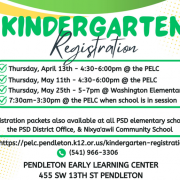
Kindergarten Registration is open for the 2023-24 school year.
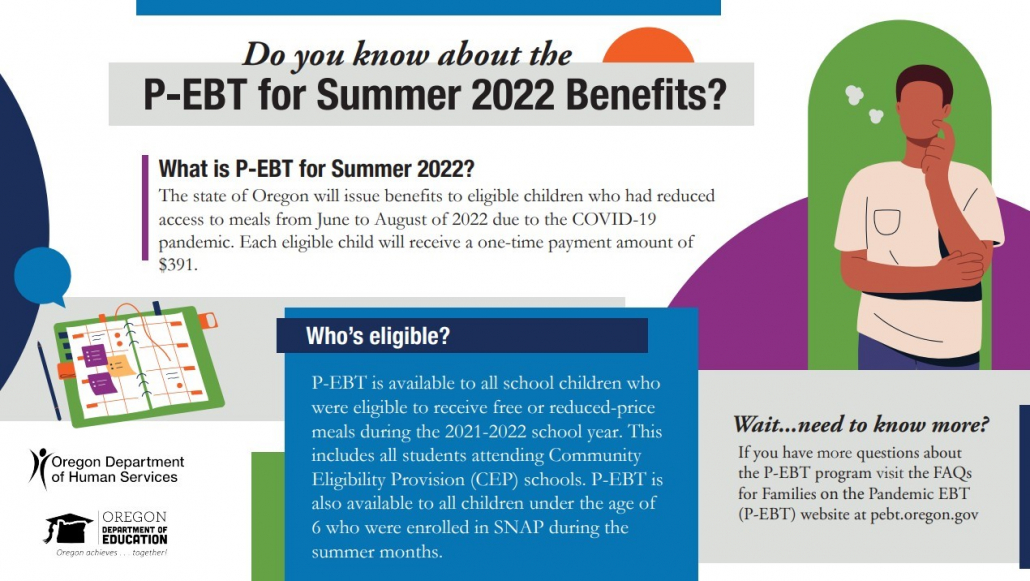
Did you know Pandemic Electronic Benefits Transfer (P-EBT) for Summer 2022 Benefits may be on the way? You can visit us at the Pandemic EBT (P-EBT) website at PEBT.oregon.gov.
Questions can be answered using the call center: 844-673-7328 or 844-ORE-PEBT
FAQ for Families – ENGLISH | SPANISH

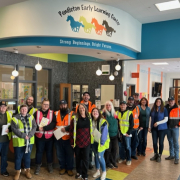
On the snowy morning of Wednesday, February 22, 2023, kindergartners at the Pendleton Early Learning Center (PELC) found a great way to thank the bus drivers from First Student, Inc., who serve the Pendleton School District.
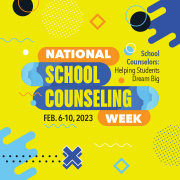
National School Counseling Week 2023 (Feb. 6-10), sponsored by the American School Counselor Association (ASCA), highlights the essential contribution of school counselors within U.S. school systems and the tremendous impact they have in helping students achieve school success and plan for a career. Every student deserves a school counselor to help with academic achievement strategies, managing emotions and applying interpersonal skills, and planning for postsecondary options. School counselors are #HelpingStudentsDreamBig. Take a moment to thank your local school counselor(s).

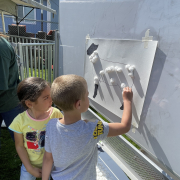
The Pendleton Early Learning Center has installed a visual communication board on its playground so that non-verbal students can communicate during recess. The board has about 60 small word-picture icons with a variety of subjects, actions, and more — things like “run, slide, yes, no, go, cold, bathroom.” Students can point to one of the icons to communicate with adults or with other students.
On a smaller scale, this visual communication tool is used in classrooms for non-verbal students as well.
Angela Lattin, Principal at the PELC, said there are several non-verbal students in the school who will benefit from the communication board, as will many of their classmates. “Our goal is that every child can communicate their needs. These boards provide exactly that access in the play setting,” Lattin said.
A second communication board will be installed on the other playground soon.